Dental services in Fairfax

TMJ/TMD Treatment in Fairfax, VA

TMJ and TMD treatment in Fairfax, VA with Tekscan digital bite analysis and conservative comfort-focused care.

TMJ/TMD evaluation built around jaw symptoms, muscles, bite forces, tooth wear, and conservative decisions.

Jaw pain, headaches, clenching, tooth wear, facial tension, and bite discomfort can have several causes. Dr. Dickson's protocol combines history, muscle and joint evaluation, bite analysis, and Tekscan/T-Scan data to support a more informed conversation before irreversible treatment is considered.

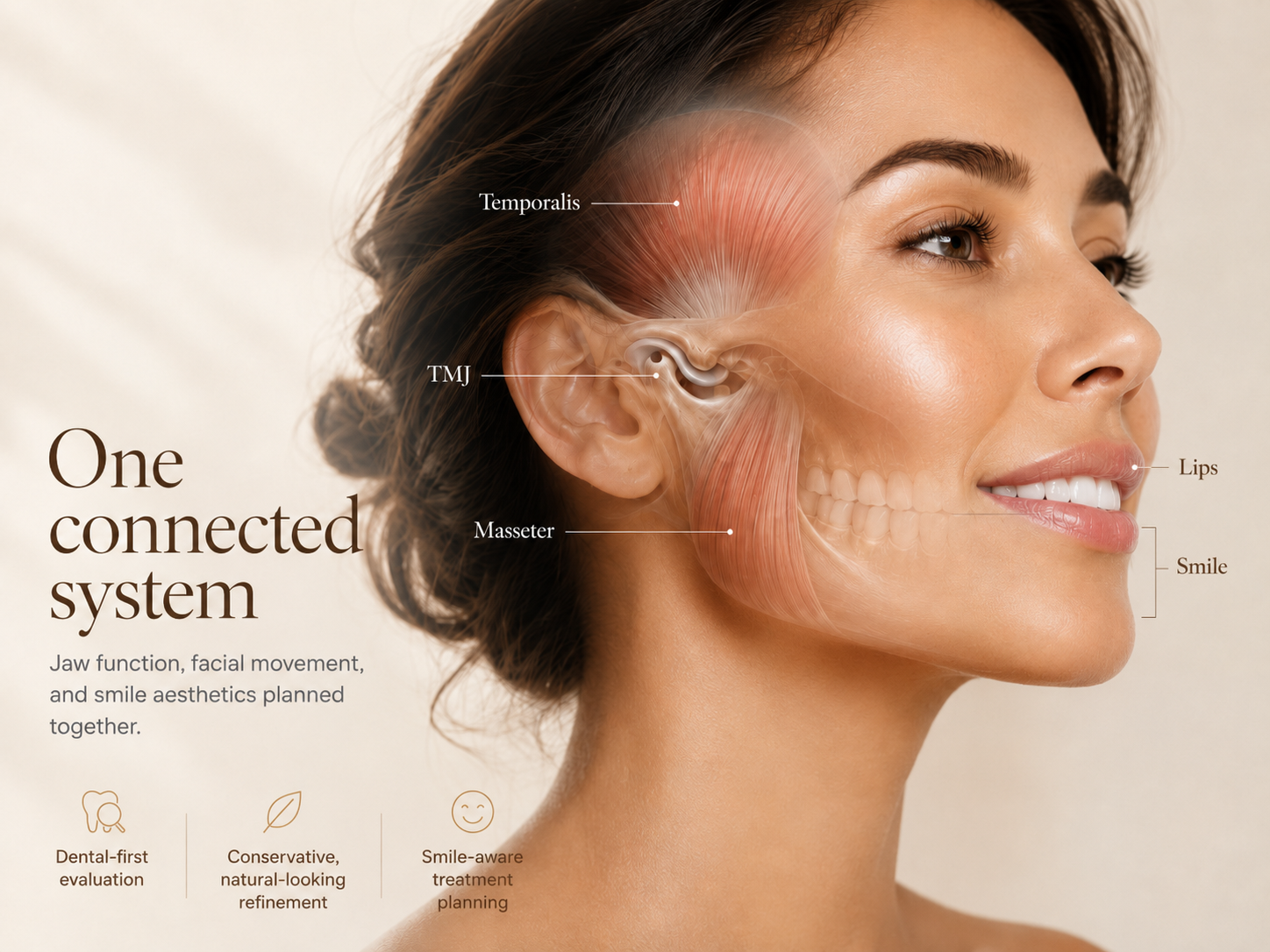
TMJ anatomy and smile-planning visual showing the temporalis muscle, jaw joint, masseter, lips, and smile as one connected system.
Jaw function, facial movement, and smile aesthetics are planned together. Open full-size visual

Decision guide

The decision behind TMJ/TMD & Facial Comfort

Patient problem

Jaw pain, headaches, clenching, and worn teeth rarely have one simple cause.

Patients may notice jaw soreness, clicking, morning headaches, facial tension, cracked restorations, sensitive teeth, or an uneven bite and wonder whether dentistry can help.

Common shortcut

TMJ care can be reduced to a guard or a quick adjustment.

A narrow approach may treat symptoms without mapping muscle findings, joint movement, habits, bite timing, dental history, medical boundaries, or whether irreversible changes are appropriate.

Our approach

Dr. Dickson evaluates the system before changing the bite.

The TMJ/TMD protocol combines symptom history, muscle and joint evaluation, tooth wear, bite contacts, and Tekscan/T-Scan data when useful, then prioritizes conservative options.

Expected result

A more informed path toward comfort and stability.

The goal is to understand contributing factors, protect teeth and restorations, avoid unsupported promises, and coordinate dental or medical next steps when needed.

Function-first bite comfort

Jaw symptoms, worn teeth, and cosmetic dentistry all depend on how the system functions.

The planning process starts with functional stability because bite forces and muscle patterns can affect comfort, restorations, veneers, crowns, guards, and aligner decisions.

  • Symptoms mapped before treatment is recommended
  • Muscle and joint findings interpreted with bite data
  • Tekscan/T-Scan used when timing and force matter
  • Conservative options prioritized before irreversible changes
Dr. Nana Dickson at Allegra Dental Center in Fairfax

Dr. Dickson's TMJ/TMD protocol

Jaw pain care guided by symptoms, muscle findings, bite data, and restraint.

Dr. Dickson's TMJ/TMD approach pairs a careful clinical exam with Tekscan/T-Scan bite-force and timing analysis when helpful, then prioritizes conservative, reversible decisions before irreversible bite changes.

Meet Dr. Dickson

Is this right for you?

Common TMJ/TMD symptoms and clues

Jaw soreness, clicking, locking, or limited opening
Morning headaches, facial tension, or tooth sensitivity from clenching
Uneven bite after dental work or orthodontics
Worn teeth, cracked restorations, or unexplained bite discomfort
Neck, temple, cheek, or ear-area discomfort that seems connected to jaw movement
New bite changes, chewing fatigue, or repeated crown, veneer, or filling problems

What to expect

What happens during a TMJ/TMD evaluation

01

Symptom mapping

Dr. Dickson reviews pain timing, triggers, clenching habits, sleep patterns, past dental work, and medical context.

02

Muscle, joint, and bite exam

The evaluation looks at range of motion, tenderness, joint sounds, wear patterns, and how the teeth meet.

03

Tekscan-informed planning

Digital bite-force and timing information may guide conversations about guards, aligners, restorations, or conservative bite changes.

04

Conservative options first

Education, habit awareness, protective appliances, restorative sequencing, aligner discussion, or referral coordination may be considered before irreversible bite changes.

05

Set medical boundaries

When symptoms suggest joint pathology, sleep concerns, neurologic issues, trauma, or non-dental causes, the team discusses appropriate medical or specialist referral.

Therapeutic Botox, used with restraint

Therapeutic Botox for jaw pain: diagnosis before dose.

The question is not simply whether botulinum toxin can relax a jaw muscle. It is whether that muscle is a meaningful source of the pain. TMD is not one condition: symptoms may arise from chewing muscles, jaw joints, teeth or restorations, headache disorders, habits, injury, sleep-related concerns, or another medical source. Reducing muscle activity may help selected patients, but it cannot make the diagnosis for us.

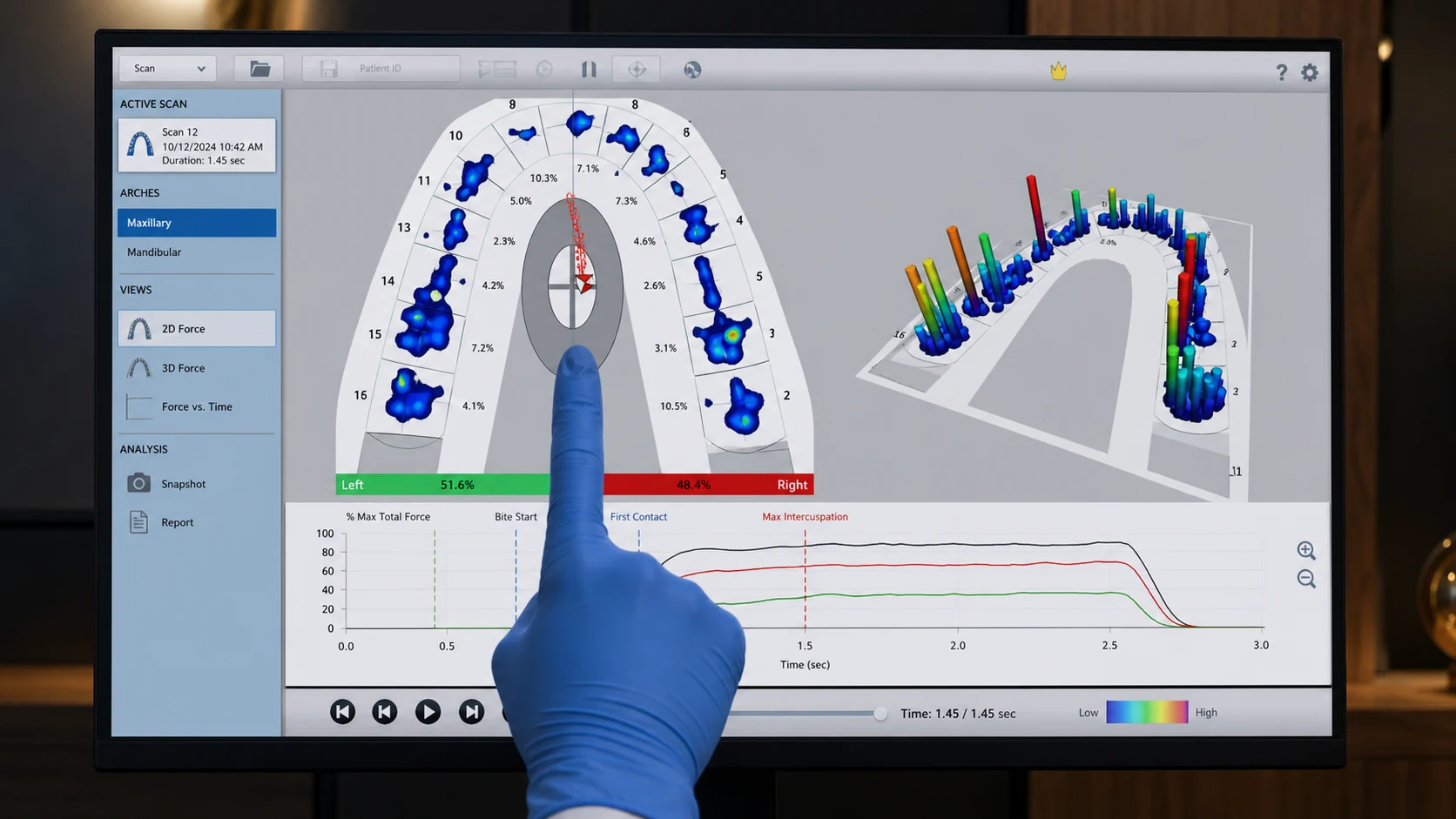
Tekscan digital bite analysis used as one part of a wider jaw pain evaluation
Data can clarify part of the picture. It does not replace diagnosis.

Function first

Identify what hurts and what appears to be driving it before changing how the chewing muscles move.

Structure before cosmetics

Protect teeth, restorations, supporting structures, and jaw joints before focusing on lower-face shape.

Beauty through balance

Separate a therapeutic goal, such as less muscular pain or fatigue, from a cosmetic goal, such as reducing masseter prominence.

May enter the conversation

A plausible muscular target and a measurable goal

Botulinum toxin may be discussed when the exam supports a meaningful muscular contribution, the intended benefit is clear, and reducing that muscle's activity fits a broader conservative plan.

Usually not the first answer

Uncertain diagnosis, joint-dominant symptoms, or a better next step

A different treatment, physical therapy, an appliance, medical or specialist referral, monitoring, or no injection may be more responsible when the findings do not support a clear muscular target.

At Allegra Dental Center, botulinum toxin is not used to make an uncertain diagnosis feel treated. When it is considered, the plan defines the target, the intended outcome, what still needs protection, and how benefit and unwanted effects will be reassessed before any repeat treatment. Use for TMD or jaw pain is off-label and requires an individualized discussion of risks, alternatives, and expectations.

TMJ decision guide

A practical map for the first conversation.

These clues do not diagnose TMD by themselves. They help organize which questions the evaluation should answer and which structures may need protection.

Jaw and muscle symptoms

Tender jaw muscles, limited opening, clicking, locking, chewing fatigue, temple pain, and facial tension are reviewed alongside timing and triggers.

Bite and tooth wear

Wear facets, cracked teeth, sensitive teeth, failing restorations, and uneven contacts can reveal force patterns that matter for comfort and restorative planning.

Headache and clenching patterns

Morning headaches, stress clenching, night grinding, and daytime jaw bracing are discussed as possible contributors, not as guaranteed dental-only causes.

Tekscan/T-Scan support

Tekscan/T-Scan helps measure bite timing and force distribution so the conversation is informed by data that bite paper cannot quantify.

Conservative care options

Depending on diagnosis, options may include education, habit coaching, a guard, aligner planning, selective restorative changes, bite monitoring, or referral coordination.

Referral boundaries

Some jaw, headache, sleep, neurologic, trauma, or inflammatory symptoms need medical or specialist evaluation. Dental care should not overpromise those outcomes.

Patient concerns

What TMJ/TMD treatment may and may not solve

Is my bite causing pain?

Sometimes bite forces contribute; sometimes muscles, habits, joints, or medical factors are involved. Diagnosis matters.

Will I need adjustment?

Not necessarily. Allegra Dental Center starts with reversible and conservative options whenever appropriate.

Can TMJ treatment be guaranteed?

No. TMJ/TMD symptoms can be multifactorial, so Allegra Dental Center focuses on careful diagnosis and step-by-step decision-making.

When should I see a physician or specialist?

Severe headaches, trauma, neurologic symptoms, suspected sleep disorders, systemic inflammatory disease, or symptoms beyond dental findings may require medical or specialist evaluation.

Deeper patient questions

Questions that make a TMJ/TMD plan safer.

What makes Dr. Dickson's protocol different?

The process combines symptom history, muscle and joint findings, wear patterns, bite evaluation, and Tekscan/T-Scan data before recommending irreversible bite changes.

Could dental work be making symptoms worse?

New crowns, veneers, aligners, missing teeth, tooth wear, or uneven contacts can affect bite comfort, so the team reviews dental history alongside symptoms.

What is the most conservative first step?

Depending on diagnosis, early steps may include education, habit awareness, a guard, referral coordination, aligner discussion, or staged restorative planning.

Technology and planning

Tekscan/T-Scan insight

Timing and force data

Traditional bite paper shows contact marks; Tekscan/T-Scan helps measure when teeth touch and how force is distributed.

Restorative context

Digital bite data can be useful when planning crowns, veneers, aligners, or nightguards for patients with force-related concerns.

Muscle and joint findings

Bite data is interpreted with range of motion, tenderness, joint sounds, habits, wear patterns, and patient history rather than used as a stand-alone diagnosis.

Service questions

Frequently Asked Questions

Ask the Office
What is Tekscan?

Tekscan/T-Scan is a digital bite analysis system that measures bite timing and force distribution.

Do all jaw symptoms come from teeth?

No. Muscles, joints, sleep, habits, posture, stress, and medical factors can contribute.

Can you make a nightguard?

A nightguard may be recommended in selected cases, but the dentist first evaluates symptoms, bite, and tooth wear.

Why is T-Scan useful for TMJ/TMD concerns?

T-Scan can show timing and force distribution that traditional bite paper cannot measure, which may help guide conservative planning.

Can TMJ symptoms affect cosmetic dentistry?

Yes. Tooth wear, clenching, bite imbalance, and jaw discomfort can influence veneer, crown, aligner, and nightguard decisions.

What happens during a TMJ/TMD evaluation?

The visit reviews symptoms, habits, dental history, jaw movement, muscle tenderness, joint sounds, tooth wear, bite contacts, and whether Tekscan/T-Scan data would help planning.

What conservative options may be discussed?

Depending on findings, Dr. Dickson may discuss education, habit awareness, a guard, aligner planning, bite monitoring, restorative sequencing, or referral coordination.

Can TMJ/TMD treatment solve headaches?

Sometimes dental factors contribute to headache patterns, but headaches can have many causes. Allegra Dental Center uses cautious language and refers when symptoms suggest a medical evaluation is needed.

Is Botox a cure for TMJ or TMD?

No. TMD describes a group of muscle, joint, and related pain conditions. Botulinum toxin may temporarily reduce activity in selected chewing muscles, but it does not treat every cause of jaw pain or permanently correct the underlying condition.

Does Botox stop teeth grinding?

Not necessarily. It may reduce force from selected muscles, but it does not necessarily eliminate sleep or awake bruxism. Teeth and restorations may still need protection.

Why might I still need physical therapy or a dental appliance?

Each option has a different job. Physical therapy may address movement and function, an appliance may protect teeth and restorations, and botulinum toxin may reduce selected muscle activity. The evaluation determines whether one or a coordinated combination makes sense.

Is therapeutic Botox the same as jaw-slimming Botox?

The medication and muscles may overlap, but the goals are different. Therapeutic care targets a documented muscular contribution to symptoms; jaw slimming is a cosmetic objective. Allegra Dental Center evaluates and discusses those goals separately.

Is Botox FDA-approved for TMD?

No. Botulinum toxin type A is not FDA-approved specifically for TMD or jaw pain. Use for these concerns is off-label and should follow diagnosis, informed consent, and a review of risks, alternatives, and realistic expectations.

Jaw pain, headaches, clenching, or bite discomfort?

Schedule a bite and TMJ evaluation before guessing at the cause.

A TMJ/TMD evaluation can help determine whether symptoms may relate to bite forces, muscle tension, tooth wear, clenching habits, or another concern that needs coordinated dental or medical guidance.