
Dental services in Fairfax

Invisalign & Clear Aligners in Fairfax, VA

Invisalign and clear aligners in Fairfax, VA for spacing, crowding, relapse, bite concerns, digital planning, refinements, retainers, and real Allegra Dental Center results.

Clear aligner treatment for adults and teens who want a straighter smile with a realistic plan.

Patients searching for Invisalign in Fairfax usually want to know whether aligners can fix crowding, spacing, relapse, or bite concerns without disrupting daily life. Allegra Dental Center evaluates tooth movement, gum health, wear patterns, cosmetic goals, and compliance before recommending clear aligner treatment.
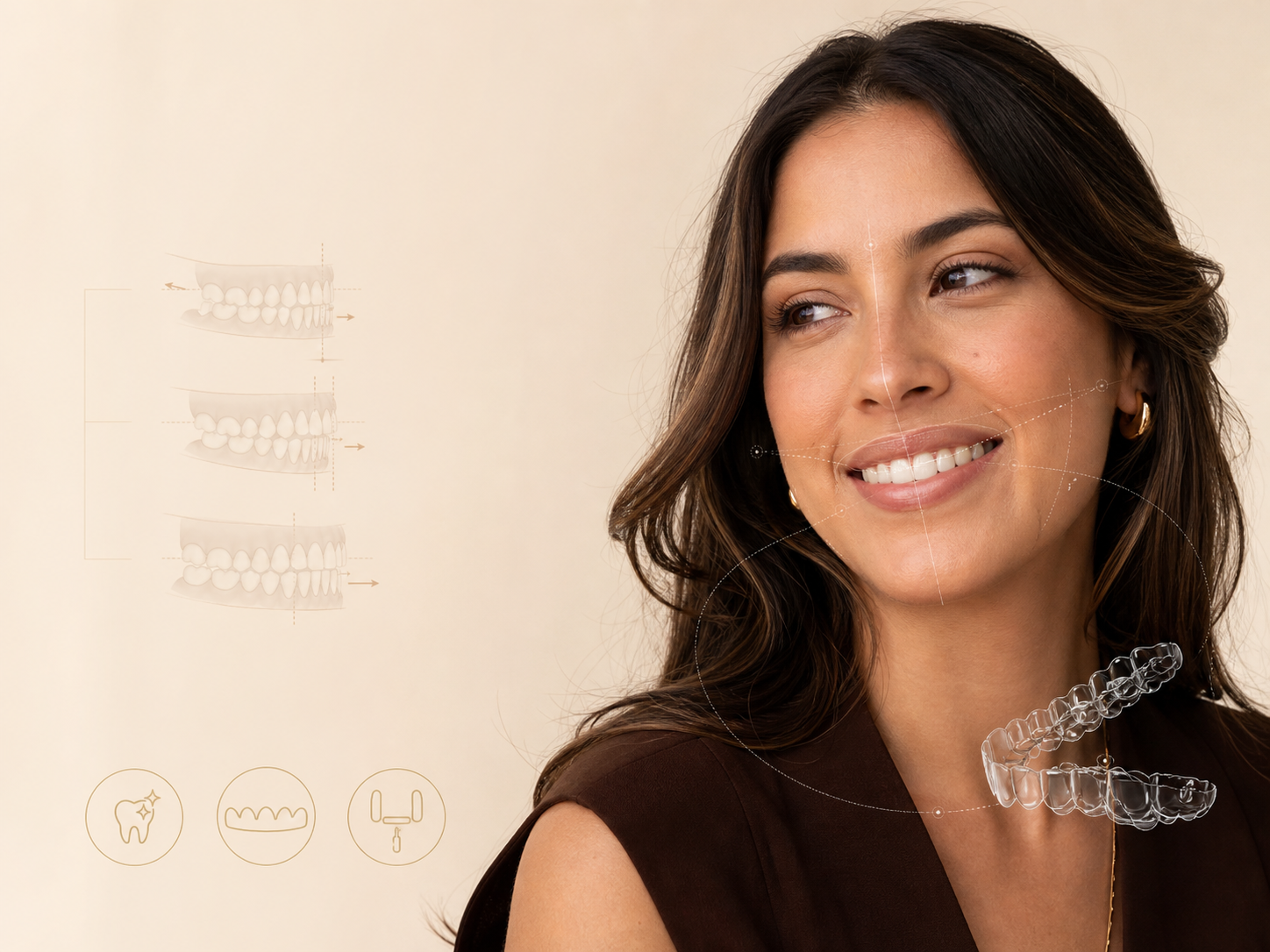
Decision guide

The decision behind Invisalign & Clear Aligners

Patient problem

You want straighter teeth without making the final smile harder to finish.

Crowding, spacing, relapse, rotated teeth, or bite fit can affect confidence, hygiene, tooth wear, and whether veneers or bonding can be conservative later.

Common shortcut

Aligners are often treated as tray delivery.

A limited aligner plan may move teeth without enough attention to gum health, bite contacts, tooth wear, cosmetic goals, retention, or how the smile should look after movement is complete.

Our approach

Alignment is planned as part of the larger smile system.

Dr. Dickson connects clear aligners with bite comfort, gum health, whitening, bonding, veneers, retention, and the patient's final smile goal before recommending movement.

Expected result

A straighter smile with a smarter next step.

The goal is not only aligned teeth. It is a cleaner, more stable foundation that may make future cosmetic dentistry more conservative and more natural-looking.

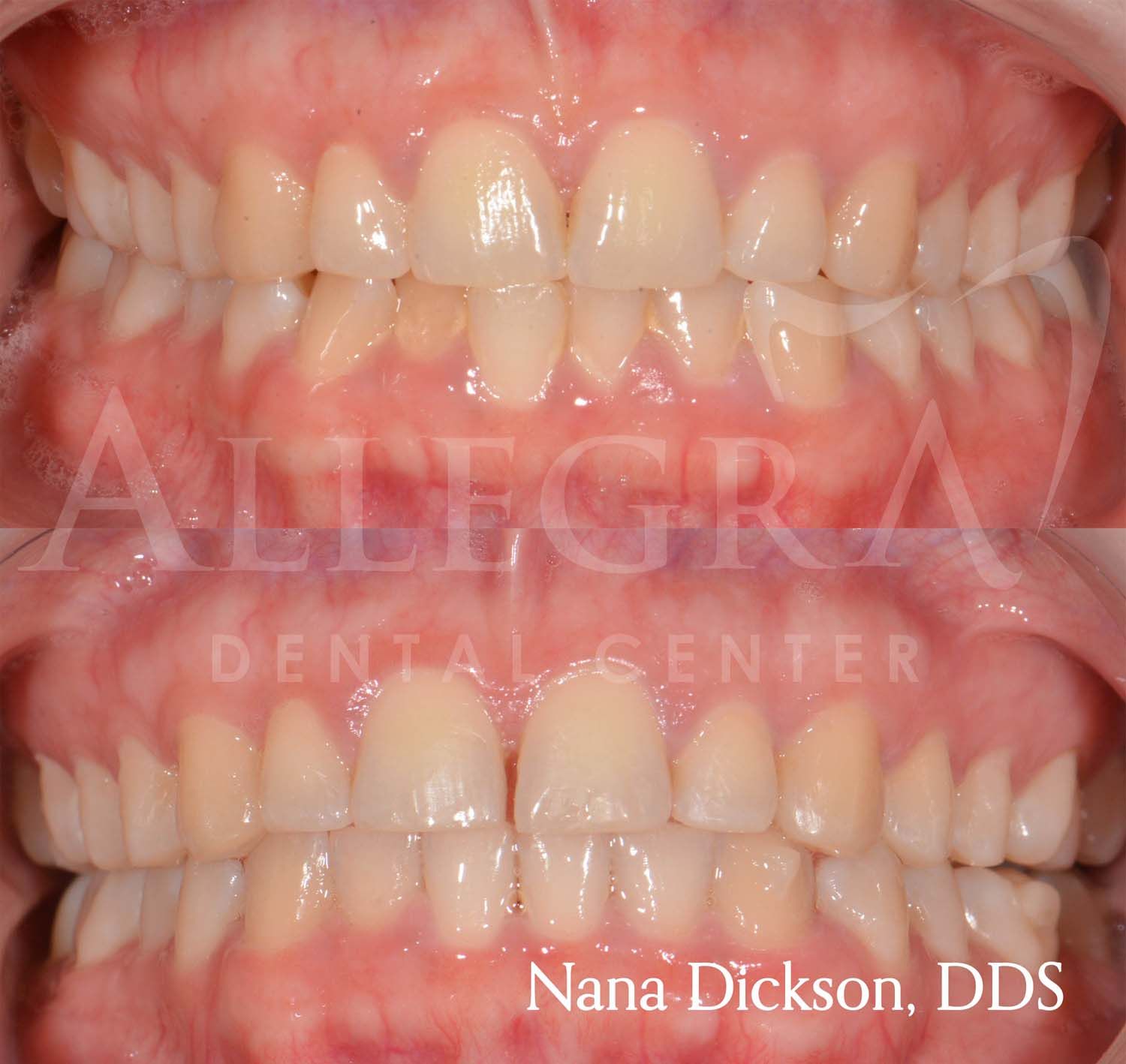
Invisalign before and after example from Allegra Dental Center

Aligners connected to smile design

Clear aligners planned around bite, wear, gums, and final smile goals.

Dr. Dickson evaluates Invisalign and clear aligner treatment in the context of tooth wear, gum health, TMJ/TMD symptoms, whitening, bonding, and veneers so movement supports the bigger smile plan.

Meet Dr. Dickson

Is this right for you?

Who may be a good clear aligner candidate

Adults or teens with mild to moderate crowding, rotations, or spacing
Patients whose teeth shifted after prior orthodontic treatment
People who want cosmetic alignment before whitening, bonding, or veneers
Patients willing to wear aligners consistently and keep teeth clean

What to expect

From consultation to retainers

01

Clear aligner consultation

Your visit starts with the concern that brought you in: crowding, spacing, bite fit, relapse, a cosmetic goal, or a desire to avoid braces. The team reviews teeth, gums, wear patterns, and photos before discussing candidacy.

02

Digital planning and expectations

Digital records help map proposed movement and explain attachments, tray changes, hygiene responsibilities, visit rhythm, possible refinements, and what aligners can and cannot predictably solve.

03

Active treatment and refinements

Patients wear aligners as directed, remove them for eating and cleaning, and return for progress checks. If teeth do not move exactly as planned, refinements may be recommended.

04

Retainers after Invisalign

After tooth movement, retainers are needed to help reduce relapse. Retention is not an afterthought; it is part of the treatment plan from the beginning.

Patient concerns

What clear aligners may not solve

Severe bite or jaw discrepancies

Some bite problems are outside standard clear aligner correction and may require orthodontic referral, specialty planning, or a different approach.

Poor compliance

Aligners only work when they are worn consistently. If wearing trays most of the day is unrealistic, treatment may be slower, less predictable, or not recommended.

Untreated gum disease or active decay

Inflammation, cavities, or unstable dental work should be addressed before moving teeth. Healthy foundations make orthodontic treatment safer and more predictable.

Cosmetic issues that need more than movement

Aligners can improve position, but they do not change tooth shape, old restorations, tooth color, or gum display. Whitening, veneers, bonding, or gum-line care may still be part of the final smile plan.

Deeper patient questions

Questions worth answering before you decide.

Will aligners improve my bite or just straighten front teeth?

Allegra Dental Center reviews bite fit, wear patterns, crowding, spacing, and relapse history so treatment is not planned only around a front-smile simulation.

What if I want veneers after Invisalign?

Aligners can sometimes reduce how aggressive cosmetic dentistry needs to be. Dr. Dickson can sequence movement, whitening, bonding, or veneers around the final smile goal.

How do I judge real results?

The Invisalign gallery gives 43 Allegra Dental Center cases to review, while the consultation explains which examples are closest to your crowding, spacing, bite, and compliance reality.

Technology and planning

Digital aligner planning

Digital records and simulation

Digital planning helps patients visualize proposed tooth movement and understand the difference between an ideal simulation and real-world biology, compliance, and refinements.

Bite and TMJ context

For patients with clenching, worn teeth, headaches, or jaw tension, Dr. Dickson may coordinate aligner planning with bite evaluation before treatment begins.

Real results gallery

The Invisalign before-and-after gallery includes 43 Allegra Dental Center cases so patients can compare real examples before scheduling a consultation. Individual results vary.

Service questions

Frequently Asked Questions

Ask the Office
How long does Invisalign take?

Timing depends on complexity, wear time, refinements, and goals. A consultation gives a more realistic estimate.

Am I a candidate for clear aligners?

Clear aligners may be appropriate for mild to moderate crowding, spacing, relapse, rotations, and selected bite concerns. Gum health, tooth shape, restorations, and compliance all affect candidacy.

How many hours per day do I need to wear aligners?

Most aligner systems require near full-time wear, with trays removed for eating, drinking anything other than water, brushing, and flossing. Your dentist will review the specific expectations for your plan.

Can Invisalign fix bite problems?

Some bite concerns can improve with aligners, but severe bite or jaw discrepancies may need referral or another orthodontic approach.

What happens if my teeth do not move as planned?

Refinements may be recommended when teeth need additional movement. This is one reason progress checks and realistic planning matter.

Can I whiten during aligner treatment?

Whitening timing should be planned with the dentist. Some patients whiten after aligners so shade decisions are clearer.

Do I need retainers?

Yes. Retainers are important after aligner treatment to reduce relapse risk.