
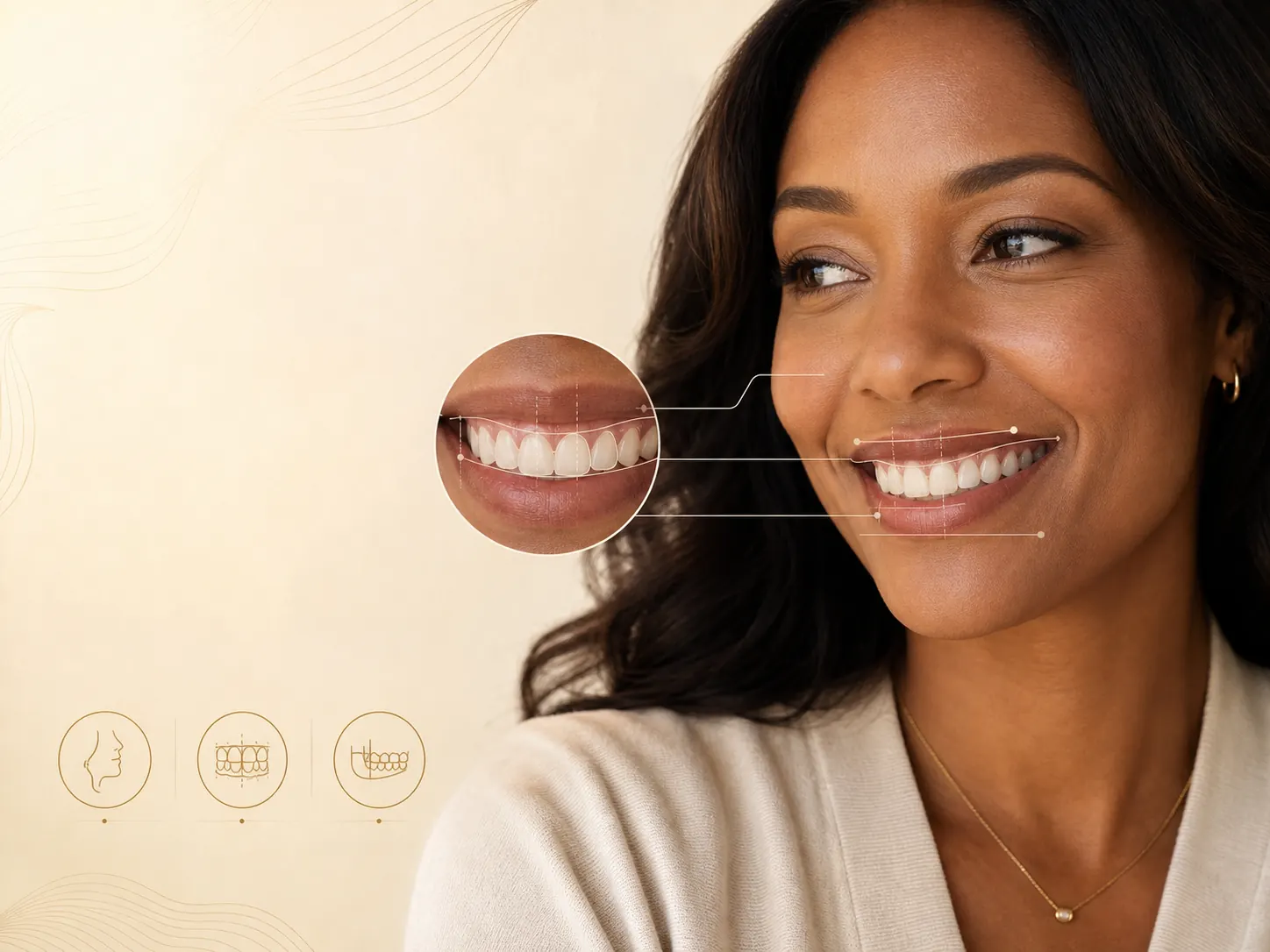
Ceramic veneers can serve for many years. Recent systematic reviews report pooled survival around 94% to 97% at approximately ten years for several established ceramic types. That number is useful, but it is not a replacement date and it is not a promise for one patient. Veneer longevity is not a countdown. It is a system built on five protections: preserve the best bonding foundation, understand bite forces, choose the design and material for the case, keep the teeth and gums healthy, and maintain the result over time.
The short answer: ten years is a research checkpoint, not an expiration date
Patients often hear that veneers last 10 to 15 years. That range can help set expectations, but it compresses very different teeth, bite patterns, materials, designs, habits, and definitions of failure into one sentence. Some veneers need repair or replacement earlier. Others remain in service well beyond a decade.
A 2025 systematic review of 29 clinical studies reported pooled survival of 93.70% to 96.81% for established feldspathic, leucite-reinforced, and lithium-disilicate ceramic veneers at an average observation period of 10.4 years. A separate 2021 review estimated 95.5% cumulative survival at ten years. These are group estimates from published studies, not an individual guarantee.
The most important word is survival. In restoration research, survival often means the veneer is still in service. Success is a stricter standard that may mean no repair, polishing, re-bonding, or other intervention was needed. A restoration can survive and still require attention. That difference is why Allegra Dental Center treats the number as a planning reference rather than a warranty.
The five-part veneer longevity system
Long-term veneer care begins before any ceramic is made. The following five protections connect the cosmetic goal to the biological and functional conditions that support it.
| Protection | What the dentist evaluates | Why it matters later |
|---|---|---|
| 1. Foundation | Healthy tooth structure, enamel available for bonding, decay, existing restorations, cracks, and gum health. | Veneers bonded mainly to enamel have shown fewer failures and clinical complications than veneers bonded over greater dentin exposure or existing composite. |
| 2. Force | Bite contacts, clenching or grinding, edge-to-edge habits, deep overbite, tooth wear, and trauma risk. | Repeated force can contribute to fractures, cracks, or debonding even when the ceramic itself is strong. |
| 3. Design | How much change is needed, preparation boundaries, ceramic selection, thickness, edge design, shade, and bonding protocol. | A beautiful shape must also fit the available tooth structure, material behavior, cleaning access, and bite. |
| 4. Environment | Plaque control, cavity risk, gum inflammation, recession, dry mouth, smoking, diet, and the health of neighboring teeth. | The veneer cannot decay, but the natural tooth at its edges can. Gum changes can also alter how a margin looks and cleans. |
| 5. Follow-through | Home care, professional maintenance, protective appliances when indicated, and early evaluation of changes. | Small problems are often easier to manage before they become fractures, decay, gum problems, or full replacement decisions. |
Protection one: preserve the best possible bonding foundation
A veneer is not strong because porcelain is simply placed over a tooth. The bonded tooth-and-ceramic system creates the result. A 2025 systematic review found higher survival and success, with fewer clinical complications, when ceramic veneers were bonded to enamel than when more dentin or existing composite was involved.
That does not mean every veneer can be placed without preparation. Teeth that are rotated, protrusive, dark, heavily restored, worn, or being changed substantially may require a different amount of preparation or even a different treatment. A bulky no-prep result is not automatically more conservative if it compromises the gum line, contour, speech, or appearance.
The responsible goal is not “no preparation at any cost.” It is to preserve healthy enamel and tooth structure whenever the case allows, then be honest when the starting condition changes the bonding foundation or makes another restoration more appropriate.
- Ask how much enamel is expected to remain for bonding.
- Ask whether old bonding, large fillings, cracks, decay, or discoloration change the plan.
- Ask what alternatives could meet the goal with less irreversible treatment.
- Ask to understand the planned tooth reduction before consenting, rather than relying on the label “minimal prep.”
Protection two: treat bite forces as part of cosmetic planning
Veneers live in a force system. Front teeth guide jaw movement, bite into food, meet during speech, and may absorb repeated clenching or grinding forces. Those forces can matter as much as the advertised strength of a ceramic.
Clinical research has associated bruxism with higher porcelain veneer failure risk. In an eight-year prospective study of feldspathic veneers, patients with bruxism who used an occlusal splint had better veneer survival than those with bruxism who did not use one. That does not prove that every veneer patient needs a nightguard or that a guard stops bruxism. It supports evaluating the risk and protecting selected restorations when the clinical findings justify it.
A digital bite record, photographs, wear patterns, symptoms, and the clinical examination may help clarify how the teeth contact. No single tool predicts the future. The goal is to identify obvious force problems, design around them where possible, and explain the remaining uncertainty.
Protection three: match the design and material to the actual case
Patients often encounter material names online and assume one ceramic is universally best. Long-term evidence supports several established ceramic types, and a 2025 meta-analysis found no statistically significant survival difference among feldspathic, leucite-reinforced, and lithium-disilicate veneers in the pooled analysis. The same review found different complication profiles and much less long-term evidence for zirconia veneers.
Material selection still matters, but it belongs inside a larger design decision. The amount of discoloration being masked, remaining enamel, desired translucency, tooth position, edge length, bite, preparation, and laboratory or digital workflow all influence the recommendation.
A responsible cosmetic plan also tests proportion and restraint. More teeth, brighter shades, and more aggressive preparation do not automatically produce a better or longer-lasting smile. The finished design should belong to the patient's face, support comfortable function, remain cleanable, and preserve future options.
Protection four: protect the tooth and gums around the veneer
Ceramic does not develop a cavity, but the natural tooth can decay where it remains exposed or at a compromised margin. Gum inflammation, recession, dry mouth, smoking, frequent sugar or acid exposure, and inconsistent cleaning can also change the environment supporting the restoration.
That is why active decay and gum disease should be addressed before cosmetic veneers. It is also why the maintenance plan should be personalized. A patient with dry mouth, a history of cavities, periodontal concerns, or difficult-to-clean contours may need a different recall interval or home-care strategy from a patient with low disease risk.
Good margin design and polishing matter, but they do not replace daily plaque control. The American College of Prosthodontists recommends lifelong recall, professional maintenance, and at-home maintenance for patients with tooth-borne restorations, including veneers.
Protection five: maintain the system, not just the porcelain
Veneers do not require a special life, but they do require the same careful prevention expected around natural teeth and other bonded restorations. Brush with fluoride toothpaste, clean between the teeth, attend the recall schedule recommended for your risk, and avoid using teeth to open packages or bite objects that are not food.
If a protective appliance is prescribed, bring it to dental visits so fit and wear can be checked. Tell the dentist if the bite suddenly feels different, an edge feels rough, floss catches, the gum bleeds or recedes, the tooth becomes sensitive, or the veneer moves. Early evaluation can separate a polish or minor repair from a larger problem.
Whitening deserves planning too. Porcelain usually resists stain better than natural enamel, but natural teeth can change color and gum levels can change over time. Future whitening may affect surrounding teeth without changing the veneer shade, so the cosmetic result should be reviewed as a whole.
- Brush twice daily with fluoride toothpaste and clean between the teeth every day.
- Keep a recall schedule based on your cavity, gum, bite, and restorative risk.
- Do not use veneered teeth as tools or repeatedly bite hard nonfood objects.
- Use sports protection and a dentist-recommended occlusal appliance when clinically indicated.
- Report movement, roughness, catching floss, new sensitivity, gum changes, or bite changes promptly.
What happens when a veneer chips, loosens, or reaches a replacement decision?
Not every change means immediate full replacement. Depending on what happened, the dentist may be able to polish a rough area, repair a limited chip with composite, re-bond a veneer that remains suitable, or monitor a stable cosmetic change. The right option depends on the ceramic, fracture location, remaining tooth, bond, margin, bite, appearance, and cause of the problem.
Replacement may be more appropriate when the veneer is fractured extensively, the fit or margin is compromised, decay is present, the underlying tooth has changed, the cosmetic mismatch is unacceptable, or a repair would not be predictable. The cause should be investigated before repeating the same design.
Replacement is not biologically neutral. Removing a bonded ceramic restoration can place additional tooth structure at risk, even with careful technique. That future maintenance burden belongs in the original consent conversation. Veneers are best understood as a long-term restorative commitment, not a one-time cosmetic purchase.
Are porcelain veneers always the longest-lasting or best choice?
No. Ceramic veneers generally show better longevity than direct composite veneers in available practice-based research, but treatment value is not decided by lifespan alone. Composite bonding may require less tooth preparation, cost less initially, and be easier to repair. It can be a responsible choice for limited shape changes, small spaces, edge repair, or a patient who values reversibility and accepts more maintenance.
Professional whitening may be enough when the concern is color rather than shape. Clear aligner treatment may improve crowding, spacing, or tooth position without covering the teeth. Gum treatment may improve inflammation or proportion before any cosmetic restoration. Monitoring may be appropriate when the issue is minor and stable.
A full-coverage crown is not simply a “stronger veneer.” It covers more tooth structure and may be appropriate when a tooth is already heavily restored, cracked, structurally compromised, or needs a different restorative design. It should not be chosen solely to make a healthy tooth look different.
| Option | Potential strength | Important tradeoff |
|---|---|---|
| Whitening | Can change natural-tooth shade without covering the tooth. | Does not change shape, spacing, wear, or the color of existing restorations. |
| Composite bonding | Often conservative and repairable for selected shape or edge changes. | May stain, wear, chip, or need maintenance sooner than ceramic. |
| Clear aligners | Can reposition teeth and sometimes reduce the amount of restorative change needed. | Requires suitable movement, consistent wear, time, and retention. |
| Ceramic veneers | Can coordinate color, shape, proportion, and selected wear changes with strong long-term evidence. | Usually involves an irreversible restorative commitment and future repair or replacement risk. |
| Crown | Can restore a tooth that needs broader structural coverage. | Requires substantially more coverage and should not replace a veneer solely as a cosmetic upgrade. |
Who may need a different plan before considering veneers?
Veneers should not be placed over untreated decay or active gum disease. Significant clenching or grinding, a deep overbite, edge-to-edge loading, limited enamel, large existing restorations, severe tooth position problems, or unrealistic expectations may require another sequence, protection strategy, or treatment.
Some concerns also need diagnosis before cosmetic coverage. A single dark tooth may have a trauma or nerve history. Rapid wear may reflect acid exposure, grinding, a bite pattern, or another condition. Recession and uneven gum levels may need periodontal evaluation. Covering the visible symptom without understanding the cause can shorten the result or create a larger future problem.
The Allegra Dental Center longevity consultation
At Allegra Dental Center, cosmetic planning follows The Forma Method: function, aesthetics, and longevity are considered together. The goal is not to sell the largest possible veneer case. It is to determine whether veneers, a more conservative alternative, a different sequence, or no treatment now best fits the patient.
A useful consultation should document the starting condition, clarify the cosmetic goal, evaluate the teeth and gums, review bite and wear, discuss the likely preparation and material approach, and explain maintenance and future replacement responsibilities. Photographs, digital records, and selected bite analysis may support the conversation when they answer a real planning question.
The result should be a decision you can explain in your own words: what is changing, what is being preserved, which risks remain, how the result will be protected, and what happens if maintenance or replacement is needed later.
- What problem are the veneers solving that whitening, bonding, alignment, or monitoring would not solve?
- How much healthy enamel and tooth structure can be preserved?
- How do my bite, wear, or grinding patterns change the design or protection plan?
- Which ceramic and preparation approach fits this case, and why?
- What maintenance, repair, and future replacement responsibilities should I expect?
Watch the decision guide
Veneer Longevity Is Not a Countdown
A patient guide to the five protections Allegra Dental Center considers when planning for a natural-looking veneer result and its long-term care.
Read the video transcript
Veneers can create a natural-looking smile, but lasting results begin before the ceramic is made. At Allegra Dental Center, we use a five-part longevity plan.
First, foundation. Preserve healthy enamel when the case allows and understand the starting tooth.
Second, force. Evaluate the bite, wear, clenching, and grinding. Strong ceramic does not cancel an unmanaged force pattern.
Third, design. Match the preparation, material, contour, and shade to the tooth, face, cleaning access, and comfortable function.
Fourth, environment. The veneer cannot decay, but the natural tooth can. Gum health, fluoride, daily cleaning, dry mouth, and cavity risk still matter.
Fifth, follow-through. Maintain the result and evaluate movement, roughness, sensitivity, gum changes, or bite changes early.
Research on established ceramic veneers shows high survival around ten years, but ten years is a checkpoint, not an expiration date or an individual promise.
When veneers are not the best fit, whitening, bonding, alignment, a crown, or monitoring may protect more tooth structure.
Schedule a cosmetic consultation with Allegra Dental Center to learn which option supports your smile goal, comfortable function, and long-term plan.
Common questions
Questions patients ask before deciding
How long do porcelain veneers usually last?
Recent systematic reviews report high group survival, roughly 94% to 97%, at about ten years for established ceramic veneer types. Some veneers need attention sooner and others serve much longer. Your tooth structure, bite, design, gum and cavity risk, habits, and maintenance influence the result.
Does a 95% ten-year survival rate mean my veneers have a 95% chance of lasting ten years?
Not exactly. It is a pooled estimate across studied restorations and patients, using each study's survival definition. It cannot predict one person's outcome or guarantee that no repair, polishing, re-bonding, or cosmetic change will occur.
Do veneers have to be replaced every ten years?
No. Ten years is a common research and discussion point, not an automatic replacement date. A veneer that remains healthy, sealed, functional, comfortable, and acceptable in appearance may continue to be monitored.
Can a chipped veneer be repaired instead of replaced?
Sometimes. A limited chip may be polished or repaired with bonded composite, while extensive fracture, poor fit, decay, a compromised bond, or an unacceptable appearance may require replacement. The dentist should also investigate why the chip occurred.
Can the tooth under a veneer still get a cavity?
Yes. The ceramic does not decay, but the natural tooth can develop decay at exposed surfaces or a compromised margin. Daily fluoride toothpaste, cleaning between the teeth, risk-based professional care, and early evaluation of changes remain important.
Can I get veneers if I grind my teeth?
Grinding does not lead to one universal answer. It can increase fracture or debonding risk, so the dentist should evaluate the bite, wear, symptoms, tooth structure, and whether another treatment or a protective appliance is appropriate. A guard may protect selected restorations but does not guarantee that grinding has stopped.
Are no-prep veneers more conservative and longer-lasting?
They may preserve enamel in a suitable case, but they are not automatically better. Adding ceramic without enough room can create bulky contours, gum or cleaning problems, or an unnatural result. The most conservative plan preserves healthy tooth structure while still meeting biological, functional, and aesthetic requirements.
Are porcelain veneers better than composite bonding?
Ceramic veneers have shown better longevity than direct composite veneers in available practice-based research, but composite can be more conservative, less costly initially, and easier to repair. The better option depends on the size of the change, tooth condition, bite, appearance goal, budget, and tolerance for maintenance.
Will whitening change the color of my veneers?
No. Whitening can brighten natural teeth but does not change porcelain in the same way. Whitening and final veneer shade should be sequenced deliberately so surrounding teeth and restorations remain coordinated.
What should I do if a veneer feels loose or my bite changes?
Contact the dentist promptly and avoid biting on that area until it is evaluated. A change in movement, bite, roughness, sensitivity, gum condition, or floss contact can signal a problem that is easier to address early.
Sources and further reading
- Survival and Complication Rates of Feldspathic, Leucite-Reinforced, Lithium Disilicate and Zirconia Ceramic Laminate VeneersJournal of Esthetic and Restorative Dentistry, 2025
- Long-Term Survival and Complication Rates of Porcelain Laminate Veneers in Clinical StudiesJournal of Clinical Medicine, 2021
- Clinical Survival and Complication Rate of Ceramic Veneers Bonded to Different SubstratesJournal of Prosthetic Dentistry, 2025
- 10-Year Practice-Based Evaluation of Ceramic and Direct Composite VeneersDental Materials, 2022
- An 8-Year Prospective Clinical Investigation on Veneer Survival and Occlusal Splints in BruxismJournal of Dentistry, 2020
- Clinical Practice Guidelines for Recall and Maintenance of Patients with Tooth-Borne RestorationsAmerican College of Prosthodontists
- Veneers: Before Treatment, Placement, Risks, and CareAmerican Dental Association, MouthHealthy